


What To Do if Your Dryer Smells Like It’s Burning
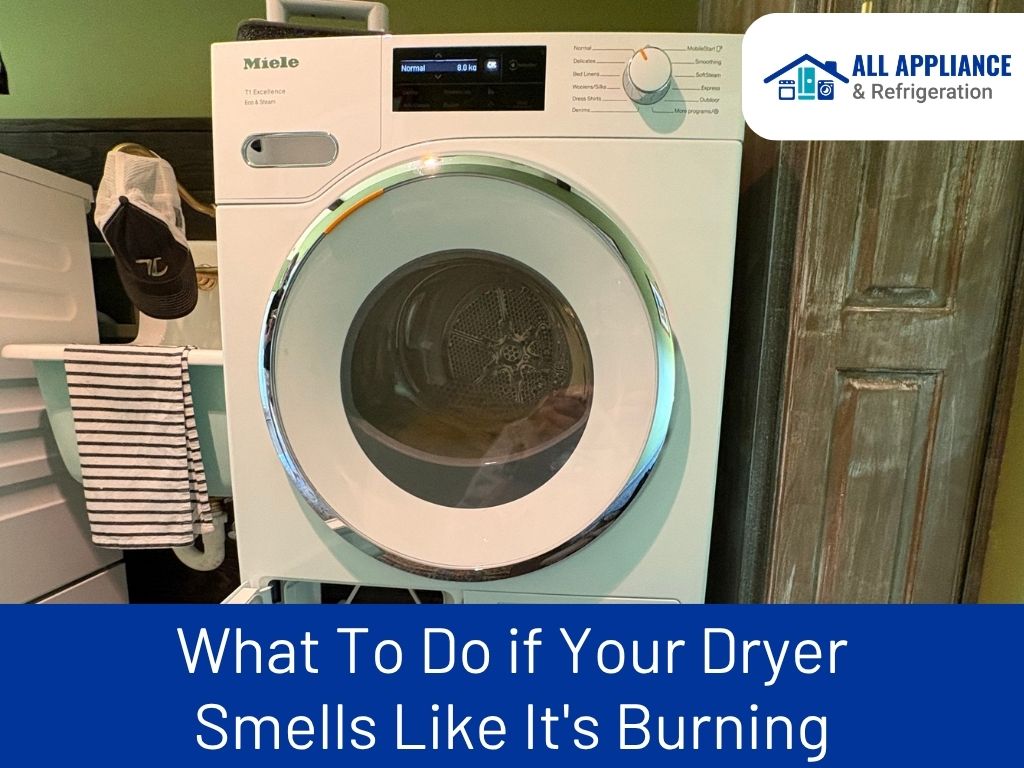
A hot dryer drum is normal. A burning smell is not. If your dryer smells like it’s burning, the good news is that you can handle a lot of this yourself. First things first, though: stop the cycle and unplug the dryer immediately. Then let’s figure out what’s going on before you run another load, because a burning smell coming from the machine can be a real fire hazard.
Most of the time it’s lint buildup you can clear in a few minutes. Sometimes it’s a belt, motor, or thermostat that needs a repair pro. Either way, you’ll know what to do by the end of this and how to keep your home safe.
This guide is for homeowners who just caught a whiff of something burning and want to know exactly what to do right now, what’s likely causing it, and when it’s time to stop tinkering and call a technician.
What Causes a Burning Smell From a Dryer?
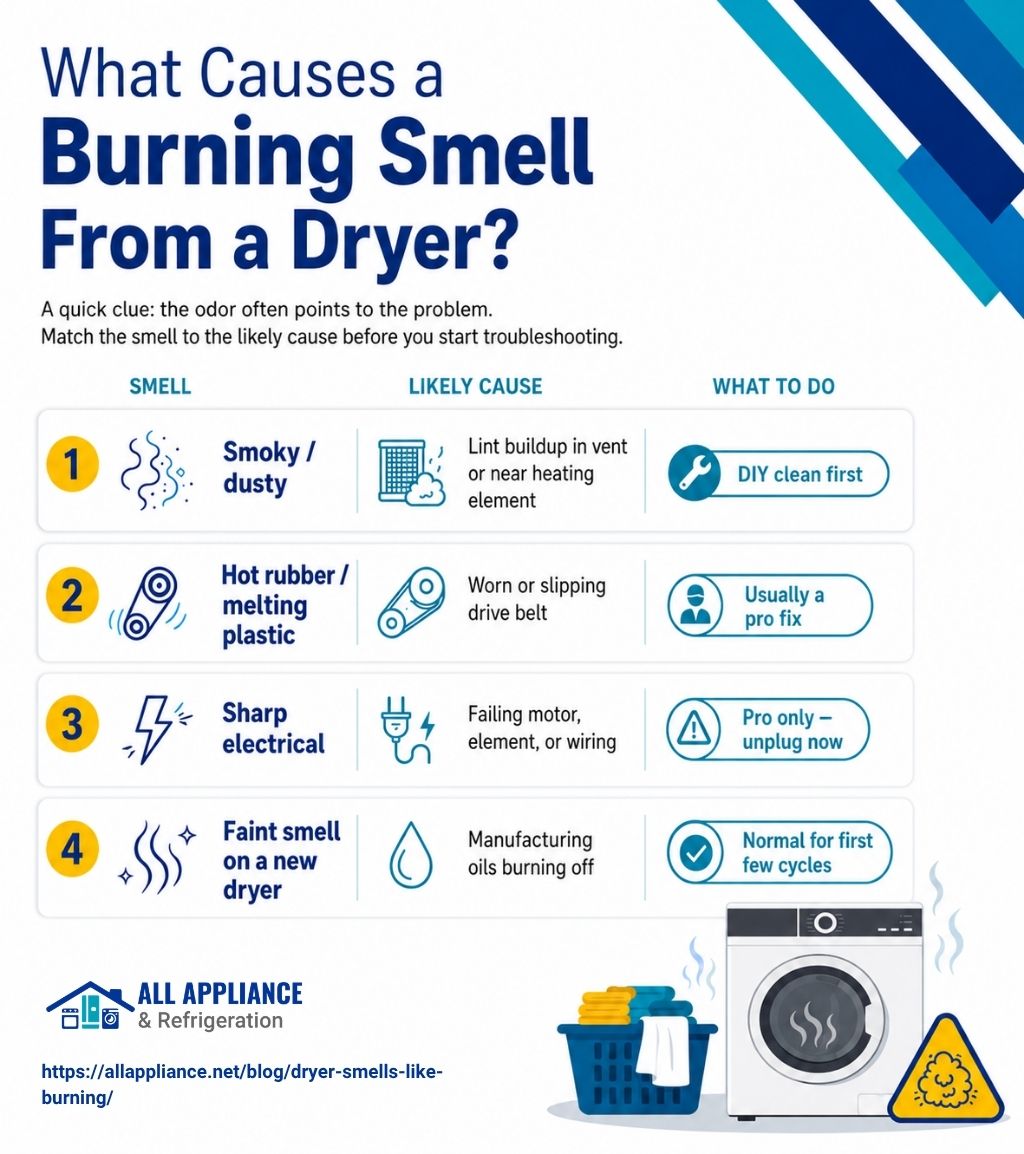
Here’s a handy trick: the smell itself tells you a lot about the cause. Before you pull the machine apart, match the odor to the likely source.
| What You Smell | Most Likely Cause | DIY or Pro? |
| Smoky, dusty, or musty | Lint buildup near the heating element or in the vent | DIY cleaning first |
| Hot rubber or melting plastic | Worn or slipped drive belt rubbing the drum | Usually pro |
| Sharp, acrid, electrical | Failing motor, heating element, or wiring | Pro only, so unplug now |
| Faint smell on a brand-new dryer | Manufacturing oils burning off the element | Normal for the first few cycles |
The five usual suspects behind almost every burning dryer smell:
- Lint buildup in the trap, drum housing, or exhaust vent
- Clogged dryer vent restricting airflow and trapping heat
- Worn drive belt melting from friction, which gives off a burning rubber odor
- Failing thermostat that can’t regulate temperature and lets excessive heat build up
- Faulty motor overheating, often with a grinding or humming noise
Lint is the one to take seriously. It’s highly flammable and can ignite against a hot heating element, and failure to clean the dryer is the leading contributing factor in home clothes dryer fires, according to the National Fire Protection Association (NFPA) report.
Lint accumulation is exactly the kind of warning sign that deserves prompt attention.
What To Do First When Your Dryer Smells Like It’s Burning
Take these steps in order, and resist the urge to “just quickly check something”:
- Cut the power. Turn the dryer off and unplug it. If it’s a gas dryer, also turn off the gas supply valve behind the unit. If your dryer is hard-wired instead of plugged in, switch off the breaker or call a pro.
- Let it cool. Give the drum and internal parts time to cool down before you reach inside.
- Remove the clothes. Pull the laundry out so nothing can scorch.
- Open a window. Air out the laundry room, especially if the smell is strong.
Once the machine is cool and powered down, work through the checks below.
How To Troubleshoot a Burning Smell, Step by Step
Work through these five checks from the most common cause to the least. Most burning smells are solved by the first two steps, so start there before you open up the machine. Keep the dryer unplugged the whole time.
1. Clean the Lint Trap
Pull out the lint screen and clear it completely. If you see a lint mat, you’ve probably found your culprit. Every so often, wash the screen under warm water to remove invisible fabric-softener residue that quietly restricts airflow.
Going forward, clean the trap after every single load. It’s the easiest habit, and it prevents the most problems.
2. Check and Clean the Dryer Vent
Lint loves to escape the screen and pile up in the dryer vent hose and exterior vent. A dryer needs proper ventilation to push hot, moist air out of the house, so any blockage in the exhaust system traps that hot air and heat fast.
Pull the dryer away from the wall, disconnect the vent hose, and clear any lint or debris with a vacuum or a flexible vent brush. Check for kinks or sharp bends that choke airflow, and make sure the exterior vent cover flap opens freely.
If you notice birds or rodents have moved in and nested there, clear anything you find. Reconnect the hose without crushing it against the wall.
3. Inspect the Drum and Drive Belt
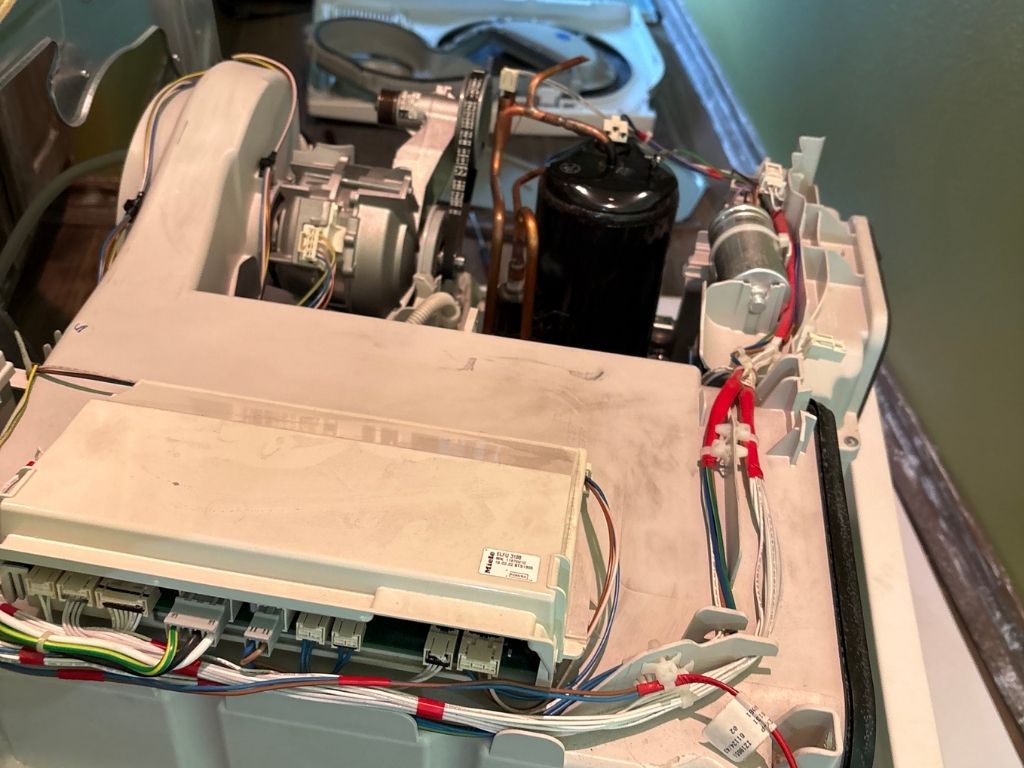
Open the dryer panel and look for trapped items or lint packed around the drum. Find the long rubber drive belt that wraps the drum and check it for visible damage like cracking, fraying, glazing, or melted spots.
That burning rubber smell? This is usually where it comes from. If the belt looks worn, it needs replacing. To get the right one, bring the old belt to the parts store to match it, or let a technician source and install it for you.
4. Test the Thermostat and Motor
A failing thermostat lets the dryer overheat, and a dying motor overheats itself (often while making strange noises). With the dryer unplugged, you can test the thermostat’s continuity with a multimeter.
As a rule, a reading of anything other than zero means it’s bad. Motors and heating elements are electrical components with sealed windings and connections. So if you’re not feeling confident here, there’s no shame in handing it to a pro.
5. Run a Short Test Load
Once everything’s reassembled and cleaned, restore power (or gas) and run a few towels on a short cycle. Stick around and keep an eye on it. If the burning smell is gone, nice work. You’ve solved it. If it comes back, stop and call a repair professional.
Gas Dryers: A Few Extra Safety Steps
Gas dryers add a fuel source to the mix, so a burning smell deserves a little more caution.
- Shut off the gas supply valve behind the dryer before you do anything else.
- If you smell gas, meaning a rotten-egg odor and not just burning, leave the house and call your gas utility or 911 from outside. Don’t flip switches or unplug anything.
- Never restart a gas dryer that smelled like burning until it’s been professionally inspected. In a gas dryer, a slipped belt can touch the heating tube and melt fast.
Condenser and Heat-Pump Dryers
Have a ventless condenser or heat-pump dryer? There’s no exhaust vent to clear, but there’s usually a second lint filter (often below the door) and a condenser unit that collects lint.
Remove the lower access panel, take out the condenser unit, and rinse it clean. A clogged condenser traps heat the same way a blocked vent does.
What To Do if Your Dryer Starts Smoking
Smoke means act now, because this is not the time to troubleshoot.
- Turn the dryer off with the power button, then unplug it.
- Keep the dryer door closed to starve any flame of oxygen.
- Open windows and let the smoke clear the room.
- Once the smoke stops, remove the clothes.
- Don’t run the dryer again. Call a repair expert to find the cause.
If you see visible smoke that’s heavy or black, or any flames, get everyone out and call 911. Only turn off the machine if you can do it safely.
Is It Just a New-Dryer Smell? That’s Usually Fine
A brand-new dryer can give off a faint burning odor for the first few cycles as manufacturing oils burn off the heating element. Run it empty on low heat for 15–20 minutes with the room ventilated.
If the smell fades, you’re all set. If it sticks around past the first few loads or gets stronger, treat it like any other burning smell and investigate.
When To Call a Professional
Reach out to a technician right away if any of these apply:
- The burning smell persists after you’ve cleaned the lint trap and vent
- You see smoke, scorch marks, or a melted plug
- There’s a sharp electrical smell (electrical dryer faults are never a DIY job)
- The dryer trips the breaker or shuts off mid-cycle
- You hear grinding, squealing, or other unusual noises along with the smell
- The dryer’s exterior gets extremely hot to the touch
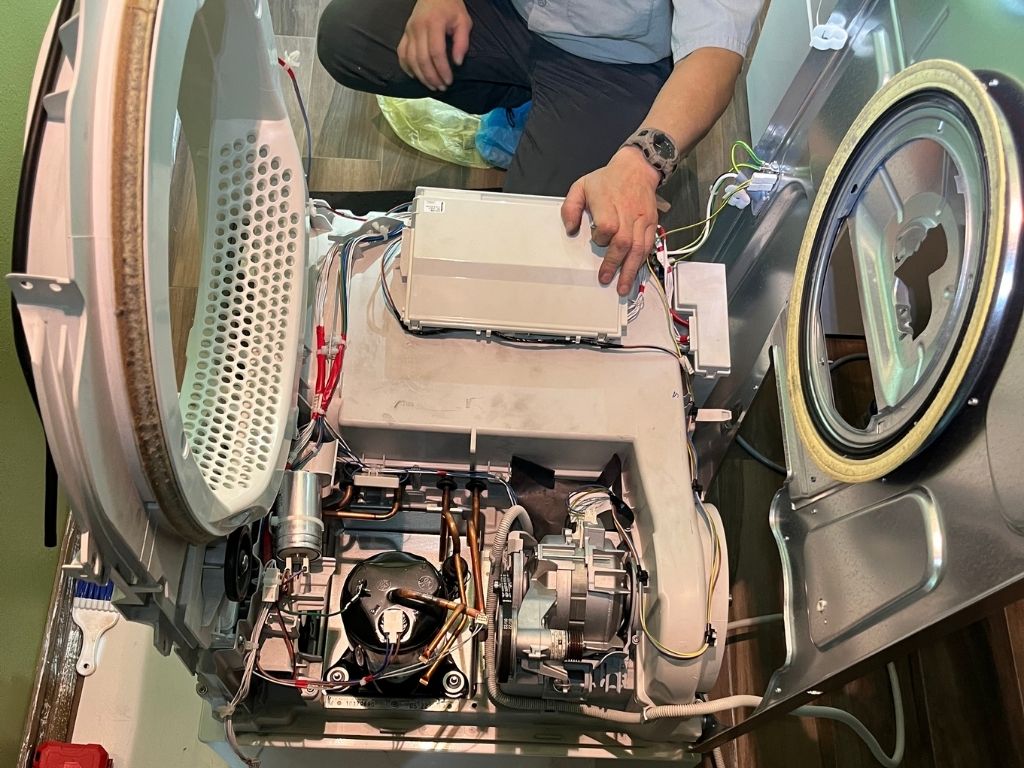
Mechanical issues like these need prompt attention and professional service. At All Appliance & Refrigeration, our technicians handle dryer repair in College Station and Bryan and track down the belts, motors, thermostats, and wiring behind burning dryer smells. On top of that, we’ll always give you a straight answer on whether a repair makes sense or you’re better off replacing the unit.
Repair vs. Replace: What It Really Costs
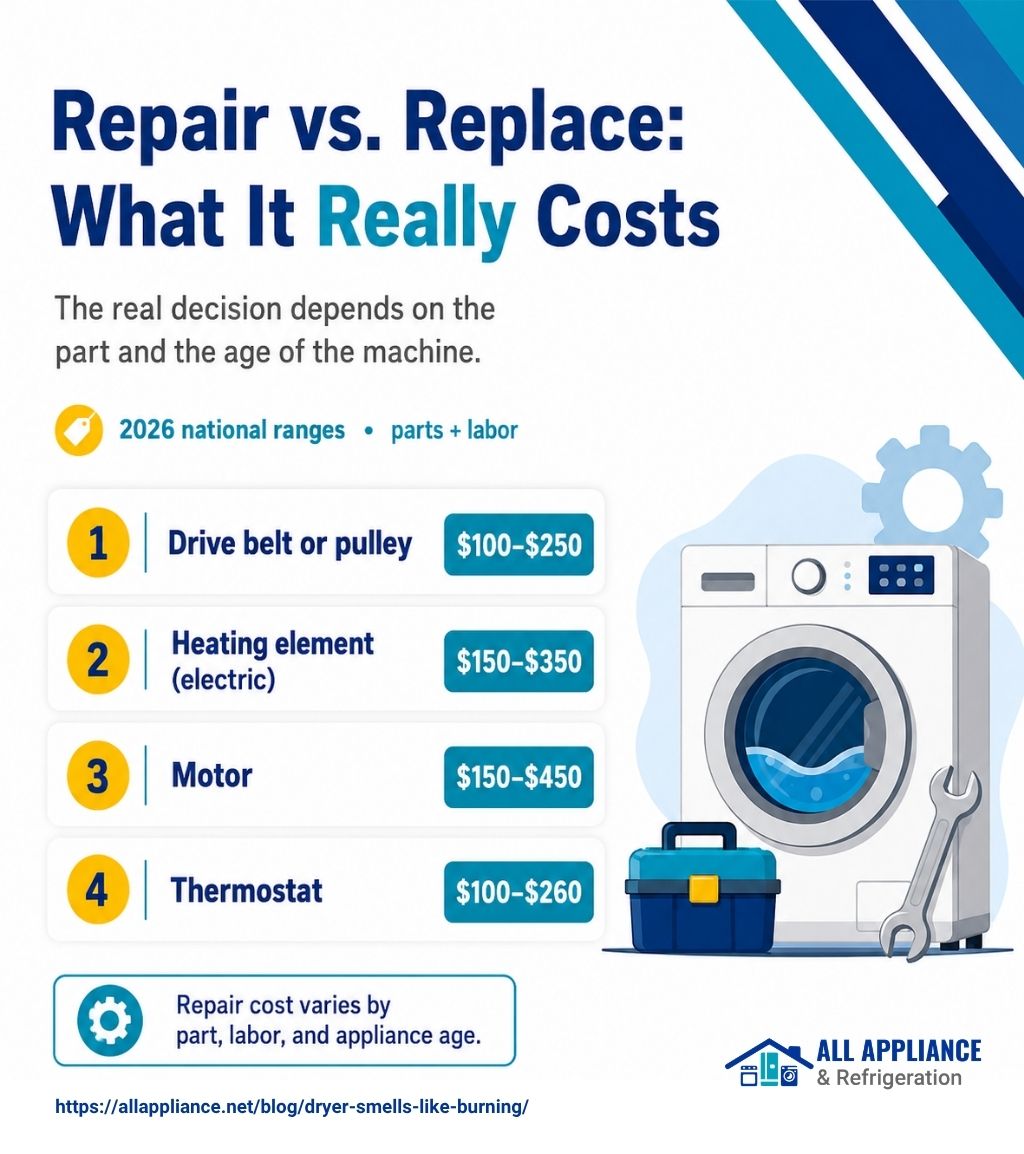
Whether to fix or replace comes down to the part and the age of the machine. Here are current 2026 national ranges, including parts and labor:
| Repair | Typical Cost Range (2026 Data) |
| Drive belt or pulley | $100 – $250 |
| Heating element (electric) | $150 – $350 |
| Motor (repair to full replacement) | $150 – $450 |
| Thermostat | $100 – $260 |
Note: The price ranges here are national averages and vary by brand, model, and region. Labor alone runs roughly $50 to $150 per hour, so get a firm quote from a local technician. (Sources: Angi, HomeAdvisor, Homewyse)
Quick rule of thumb: if your dryer is over ten years old and the repair creeps toward half the price of a new one, replacement usually makes more financial sense. Newer models also add moisture sensors and safety cutoffs that lower the odds of overheating in the first place.
How To Prevent Burning Smells Going Forward
Most burning-smell calls trace right back to skipped maintenance. Regular maintenance is something most homeowners can keep up with, and this simple routine means you’ll rarely think about it again:
- Every load: Clean the lint screen before or after each cycle. A screen that’s cleaned regularly is the single best defense against burning smells.
- Every load: Don’t overload the drum, because clothes need room to tumble for airflow.
- Quarterly: Inspect and clear the vent hose and exterior vent flap.
- Annually: Schedule a professional cleaning of the vent, especially for long or twisty vent runs.
- Watch for early signs: Longer drying times, a hot cabinet, or new noises all mean it’s time to check.
A burning smell often shows up alongside other laundry problems. If your dryer trouble comes with a washer acting up too, our guides on a washing machine that won’t spin and a washing machine that won’t drain walk you through those fixes.
Frequently Asked Questions
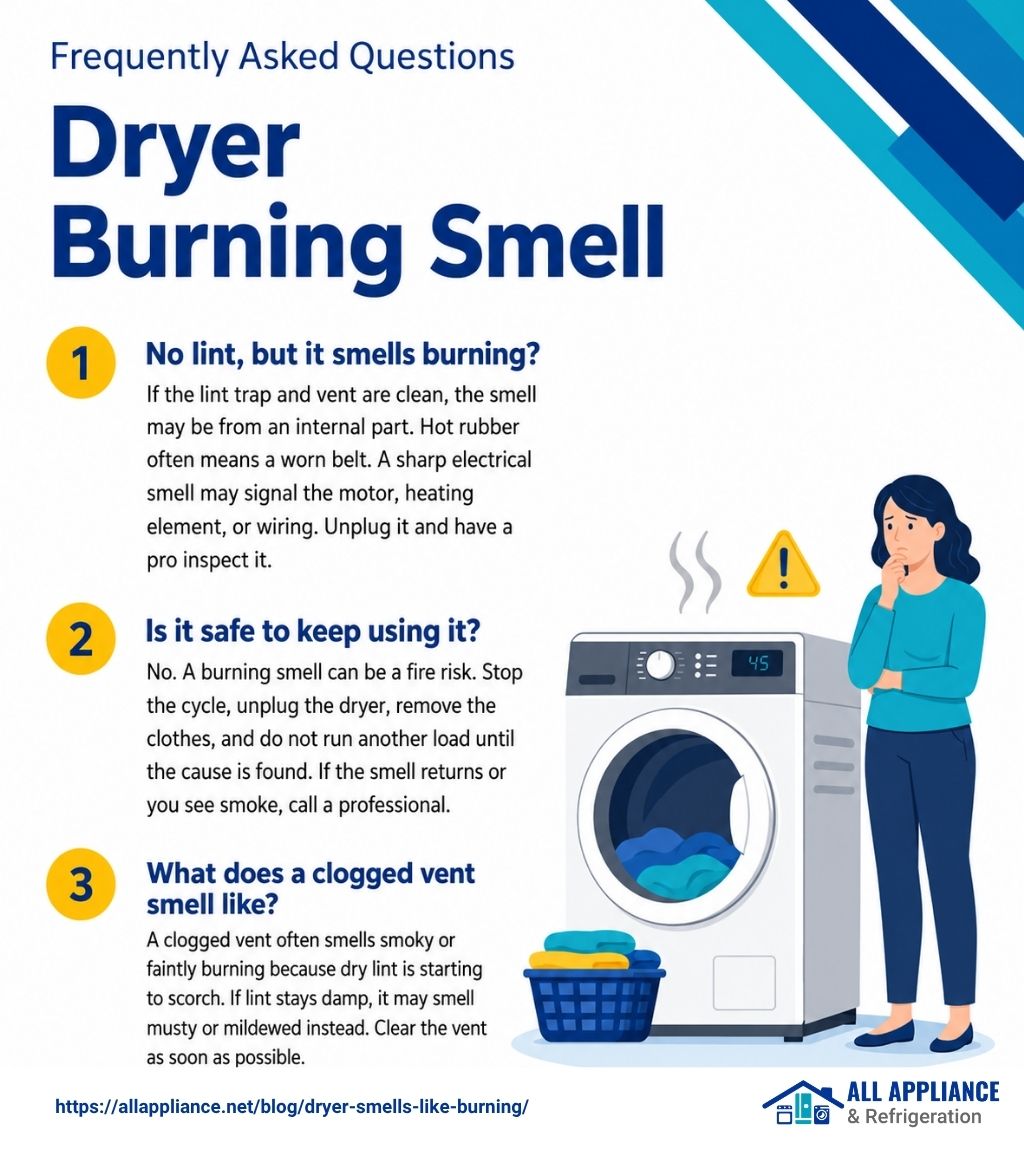
Why Does My Dryer Smell Like Burning but There’s No Lint?
If the lint trap and vent are clean, a burning smell usually points to a mechanical part. A hot-rubber odor is typically a worn drive belt, while a sharp electrical smell suggests a failing motor, heating element, or wiring. Unplug the dryer and have a professional technician test the internal components.
Is It Safe To Use a Dryer That Smells Like Burning?
No. Keep using it, and you risk a fire. Unplug the dryer, remove the clothes, and find the cause before running another load. If the smell returns after cleaning or you see smoke, stop and get professional help.
What Does a Clogged Dryer Vent Smell Like?
A clogged vent usually smells smoky or like something is faintly burning when the dryer is running. That smell is dry lint starting to scorch. If the lint stays damp, it can smell musty or mildewed instead. Either way, the vent needs clearing.
The Bottom Line
A burning smell from your dryer is a warning worth acting on right away. Still, it’s usually fixable. Unplug the machine, shut off the gas if you have a gas model, and clear the lint trap and vent first, which solves most cases. If the smell is rubbery or electrical, keeps coming back after cleaning, or shows up with smoke or noise, that’s a mechanical or electrical fault best left to a pro.
If your dryer still smells like it’s burning after you’ve cleaned it, don’t gamble on it. Contact All Appliance & Refrigeration to schedule a dryer repair. We’ll find the source and give you an honest fix-or-replace recommendation.

